Project | SOC / Security Monitoring

Wazuh SIEM / XDR

Wazuh deployed as a self-hosted SIEM and XDR platform in an LXC container on the Proxmox cluster — collecting endpoint events, correlating Suricata network alerts, and providing a real alert triage environment for SOC-style investigation practice.

Wazuh SIEM XDR Suricata Integration Endpoint Agents Alert Triage
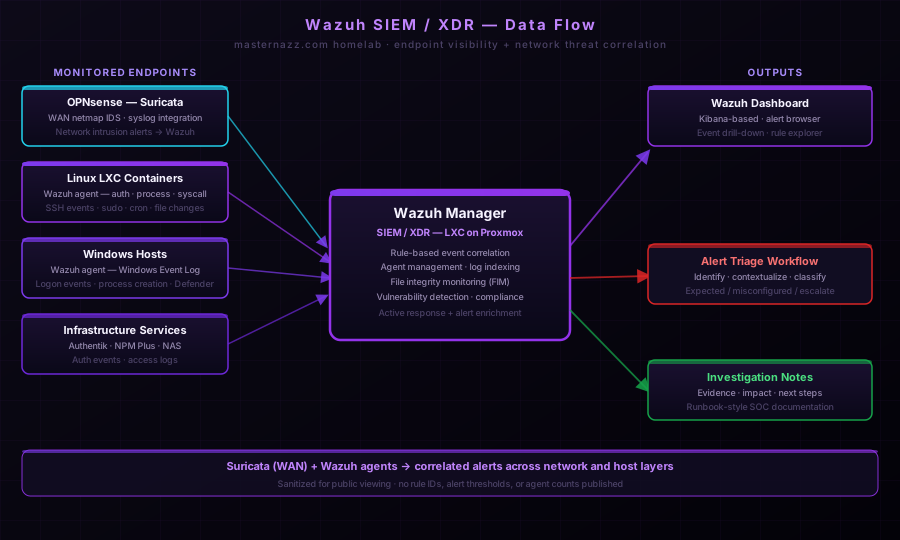
Wazuh SIEM data flow diagram

What I Built

  • Deployed Wazuh as a self-hosted SIEM/XDR in an LXC container on the Proxmox cluster, running as a persistent production service.
  • Configured Wazuh agents on Linux LXC containers and Windows hosts to forward security events — authentication, process activity, file integrity, and system calls.
  • Integrated Suricata IDS alerts from OPNsense's WAN interface into Wazuh via syslog so network-layer and host-layer events land in the same dashboard for correlation.
  • Used the Wazuh dashboard for alert browsing, rule inspection, and investigation workflows across multiple endpoint types.
  • Practiced SOC-style triage: identify the alert → review surrounding context → classify → document findings and next steps.

Skills Demonstrated

  • SIEM/XDR deployment and agent configuration
  • Endpoint visibility across Linux and Windows systems
  • Network and host event correlation (Suricata + Wazuh)
  • Alert triage and classification workflow
  • File integrity monitoring and compliance concepts
  • SOC-style investigation documentation
Integration

Suricata + Wazuh Correlation

Suricata runs on OPNsense's WAN interface in netmap mode and forwards IDS alerts to Wazuh via syslog. Network-layer detections and host-layer events appear in the same platform — a detection on the wire can be cross-referenced with what the endpoint was doing at the same time.

Visibility

Agent-Based Endpoint Coverage

Wazuh agents on Linux containers and Windows hosts collect authentication events, process creation, file integrity changes, and system-level activity. The manager correlates these against built-in and custom rules to surface meaningful alerts rather than raw log noise.

Workflow

Triage Practice Environment

Real alerts from the homelab infrastructure — failed logins, config changes, unexpected processes — create a low-stakes environment to practice the analyst triage loop: identify, contextualize, classify, and document. The same workflow scales directly to production SOC work.
What This Shows Employers

Wazuh is used in production SOC environments. I deployed it, wired it to real endpoints, and connected it to a live IDS feed — not a classroom simulation. I understand how alerts are generated, why correlation between network and host events matters, and what the triage workflow looks like from inside the tool. That's day-one relevant for SOC analyst and junior security operations roles.

Explore More Projects

Project pages covering the infrastructure being monitored.

Get In Touch

Open to Junior Network Administrator, SOC Analyst, NOC, MSP, Help Desk, IT Support, and Cybersecurity Internship opportunities.

Email Me LinkedIn GitHub

Email: NazeemDickey@gmail.com | Boynton Beach, FL